
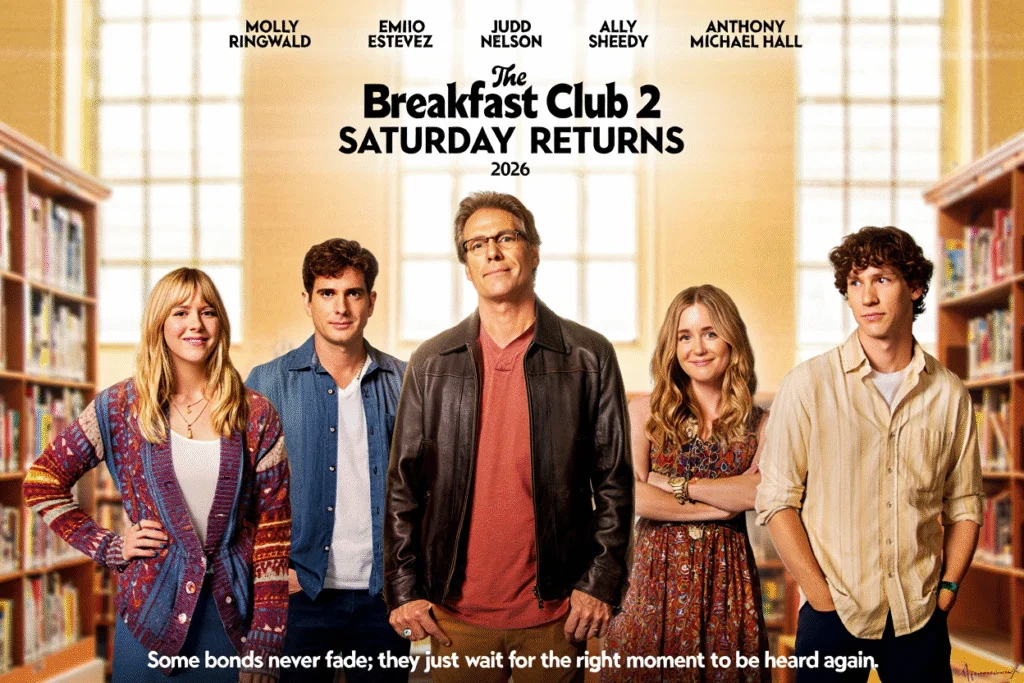
The Breakfast Club 2: Saturday Returns (2026) unfolds like a nostalgic echo that slowly transforms into something deeper, darker, and unexpectedly emotional. Decades after that unforgettable Saturday detention that once forced five teenagers from different social worlds into a single room, the story revisits the legacy of that day through a new generation of students who unknowingly walk into the same library, now renovated but still heavy with invisible memories. The film opens with an ordinary Saturday detention that feels routine at first, yet the atmosphere quickly becomes charged when five completely different students discover an old essay hidden behind a loose library panel — a letter signed by the original “Breakfast Club.” That discovery becomes the emotional trigger of the entire narrative, turning what begins as punishment into a journey of identity, truth, and generational reflection.

As the morning unfolds, each character embodies a modern archetype: the influencer hiding loneliness behind confidence, the overachiever crushed by parental expectations, the rebellious outsider masking trauma, the quiet artist struggling with self-worth, and the athlete suffocating under the pressure of social perfection. What makes the film compelling is how it mirrors the original structure while reinventing the emotional conflicts for a contemporary era dominated by digital personas and silent mental battles. Their conversations start shallow and defensive, filled with sarcasm and judgment, but gradually crack open into raw confessions that feel painfully authentic. The screenplay brilliantly uses long dialogue sequences to build tension, allowing emotional revelations to feel earned rather than forced.

Midway through the film, the tone shifts when the students begin reading fragments of the old letter aloud, realizing that the teenagers from decades ago struggled with similar fears, insecurities, and societal labels. This parallel storytelling is where the film truly shines, blending past and present into a seamless emotional tapestry. The library becomes more than just a setting — it transforms into a symbolic space of generational healing, where voices of the past silently guide the present. The film carefully balances humor and vulnerability, making moments of laughter feel like emotional relief before diving back into intense introspection.

The emotional peak arrives during a powerful confrontation scene where the group stops pretending to be their assigned stereotypes and finally confronts the masks they wear outside school. Secrets unravel, friendships fracture, and then rebuild in the most organic way possible. The tension is not driven by external drama but by internal struggles, which makes every emotional outburst feel grounded and deeply relatable. The director masterfully uses close-up cinematography to capture subtle expressions — trembling hands, hesitant eye contact, and silent tears — turning small moments into cinematic highlights that resonate long after the scene ends.

What elevates Saturday Returns beyond a simple sequel is its thematic evolution. Instead of repeating the same message, the film explores how societal labels have evolved but emotional isolation remains timeless. It questions whether today’s hyper-connected generation is actually more alone than ever, and whether understanding still requires vulnerability rather than performance. The subtle references to the original detention day are woven into the narrative without feeling forced, rewarding longtime fans while still remaining accessible to new audiences who may have never experienced the original story.
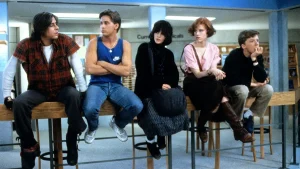
By the final act, the students choose to write their own letter — not as copies of the past, but as individuals who finally understand each other beyond stereotypes. The ending is quiet yet profoundly moving, closing with a reflective montage that suggests that while decades pass and generations change, the need to be seen, heard, and understood never disappears. The Breakfast Club 2: Saturday Returns (2026) ultimately becomes less about detention and more about emotional liberation, delivering a heartfelt, introspective sequel that honors the spirit of the original while boldly redefining it for a new era.