
🎬 “Private Romeo (2026)” is a haunting, intimate, and unexpectedly powerful reimagining of forbidden love, set behind the rigid walls of a military academy. From the very first moments, the film pulls you into a world defined by discipline, tradition, and silence—where emotions are buried deep and vulnerability is treated as weakness. The story follows Sam Singleton, a quiet cadet with a sharp mind and guarded heart, whose life takes an irreversible turn when he forms a secret bond with another cadet during a literature assignment centered on Romeo and Juliet. What begins as academic curiosity slowly evolves into something far more dangerous and deeply human. The film doesn’t rush this connection; it lets it breathe, simmer, and ache in a way that feels painfully real.

❤️ At its core, “Private Romeo” is not just a gay love story—it’s a meditation on identity, repression, and the cost of denying who you are. Sam’s internal struggle is portrayed with raw subtlety, as he navigates the expectations of masculinity imposed by the military environment while discovering emotions he has never allowed himself to name. His relationship with his fellow cadet is built on stolen glances, whispered conversations, and moments of closeness that feel explosive precisely because they are forbidden. The film captures that terrifying beauty of first love—the kind that makes your world brighter and more fragile at the same time. Every scene between them carries the tension of being seen, of being exposed, and of losing everything.
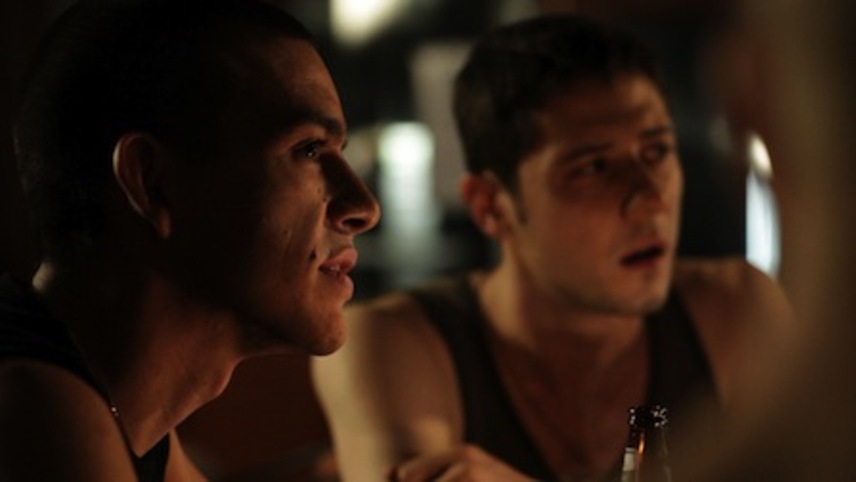
🎖️ The military academy setting becomes a character in itself—cold, imposing, and relentlessly watchful. Marching drills, spotless dorm rooms, and authoritarian lectures create a suffocating backdrop that contrasts sharply with the tenderness of the central relationship. The film cleverly uses structure and routine to heighten the emotional stakes; love here is not just taboo, it’s an act of rebellion. There’s a chilling sense that the walls are closing in, that the system is always one step away from discovering the truth. This constant pressure makes even the smallest acts of affection feel monumental, and every choice the characters make feels heavy with consequence.

📖 One of the film’s most beautiful elements is how it weaves Shakespeare’s words into the narrative without ever feeling pretentious. Passages from Romeo and Juliet mirror the characters’ emotional journeys, turning classroom discussions into moments of painful self-recognition. As Sam reads lines about doomed love and fate, you can see him realizing that this story isn’t just literature—it’s a warning. There’s a heartbreaking scene where the cadets debate whether love is worth dying for, while the camera lingers on Sam’s face, already knowing his answer. The film uses poetry not as decoration, but as a quiet weapon that exposes truths no one dares to say aloud.

🌒 Emotionally, “Private Romeo” is restrained yet devastating. The performances are understated, relying on body language, silence, and unspoken longing rather than dramatic declarations. When conflict finally erupts, it doesn’t explode—it implodes. The consequences are deeply personal, and the film refuses to offer easy villains or clean resolutions. Instead, it shows how systems harm people without ever raising their voice, and how love can be both a refuge and a risk. You don’t leave this movie feeling comforted; you leave feeling understood, and that’s far more powerful.

✨ By the end, “Private Romeo (2026)” lingers like a quiet ache you can’t shake off. It’s a film about courage—not the loud, heroic kind, but the courage it takes to be honest with yourself in a world that punishes honesty. The final moments are bittersweet, tender, and deeply human, reminding us that even love that doesn’t survive can still change us forever. This is a gay romance that doesn’t rely on spectacle or tragedy for impact; its strength lies in its honesty and emotional precision. If you’re looking for a film that speaks softly but cuts deep, “Private Romeo” is one you won’t forget.