
Tyler Perry’s Joe’s College Road Trip (2026) – A Hilarious Detour into Heart and Hard Truths
Tyler Perry returns to one of his most beloved comedic creations in Tyler Perry’s Joe’s College Road Trip, a spirited and surprisingly heartfelt journey that blends outrageous humor with sincere family reflection. Anchored by the ever-unfiltered Uncle Joe—portrayed with delicious irreverence by Tyler Perry—this road trip comedy takes audiences on a chaotic cross-country adventure that’s as emotionally resonant as it is riotously funny. While the film carries Perry’s signature broad comedic strokes, it also ventures into deeper territory, exploring generational gaps, evolving definitions of success, and the anxieties surrounding the transition into adulthood. What could have been a simple fish-out-of-water farce becomes, in Perry’s hands, a layered story about family, legacy, and letting go.

The story follows Joe Simmons as he reluctantly agrees to drive his grandniece Trinity to her dream college after her mother is unexpectedly called away. Joe, never one to sugarcoat his opinions, views college as an overpriced “four-year vacation with homework,” and his skepticism fuels much of the film’s early comedy. Trinity, ambitious and determined to escape the limitations of her small-town upbringing, represents a new generation shaped by technology, social awareness, and sky-high expectations. Their generational clash becomes the emotional engine of the film. Along the road, a string of misadventures—broken-down cars, questionable motels, eccentric hitchhikers, and an unforgettable detour through a competitive barbecue festival—provide the comedic scaffolding, but beneath the laughter lies a tender examination of fear: Joe’s fear of irrelevance and Trinity’s fear of failure.

Artistically, the film balances slapstick chaos with moments of surprising stillness. Perry’s direction leans into vibrant roadside Americana—neon-lit diners, dusty highways, and lively Southern towns—creating a colorful backdrop that mirrors Joe’s larger-than-life personality. The cinematography captures both the absurdity of Joe’s antics and the quiet vulnerability that peeks through when the character confronts his own insecurities. The editing keeps the pacing brisk, allowing punchlines to land sharply while giving emotional scenes enough breathing room to resonate. Though some jokes are undeniably over-the-top, they rarely feel gratuitous; instead, they function as shields that mask deeper truths, much like Joe himself.
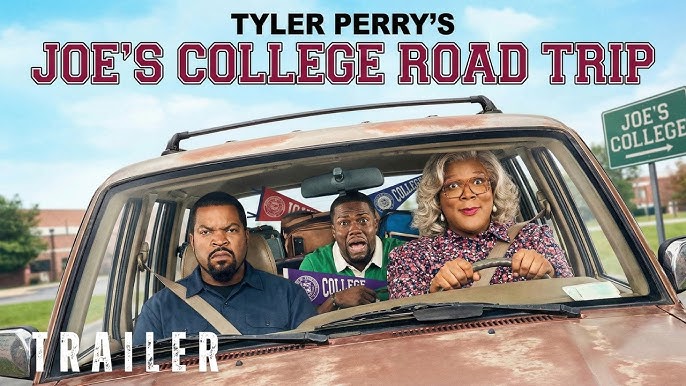
Performance-wise, Tyler Perry once again proves why Joe remains one of his most enduring creations. Beneath the exaggerated swagger and biting one-liners, Perry infuses Joe with subtle notes of regret and protective love. The chemistry between Perry and the actress playing Trinity feels authentic, grounding the film’s more theatrical moments. Supporting characters—ranging from an overly enthusiastic college admissions officer to a philosophical truck driver who dispenses life advice over greasy diner food—add texture and warmth. Each supporting performance enhances the central dynamic rather than overshadowing it, reinforcing the film’s focus on the evolving relationship between uncle and niece.

Emotionally, Joe’s College Road Trip resonates because it acknowledges that laughter often coexists with anxiety. As the miles accumulate, Joe begins to confront memories of roads he never took and dreams he abandoned. Trinity, meanwhile, grapples with the realization that ambition carries its own burdens. Their shared vulnerability culminates in a climactic campus visit that avoids sentimentality in favor of honest conversation. The film doesn’t present college as a magical solution nor dismiss it as a pointless expense; instead, it frames higher education as a symbol of choice—the opportunity to define one’s own path. That nuance elevates the narrative beyond standard road trip fare.

Ultimately, Tyler Perry’s Joe’s College Road Trip succeeds because it understands its audience. It delivers the broad, crowd-pleasing comedy fans expect while offering enough emotional depth to leave a lasting impression. The film may not reinvent the genre, but it reinvigorates it with personality and purpose. Tyler Perry once again demonstrates his ability to connect humor with humanity, reminding viewers that sometimes the most important journeys aren’t about the destination, but about the conversations—and confrontations—that happen along the way.