
🩸 “The Witch: Part 3 (2026)” doesn’t ease you back into its world—it drags you in, locks the door, and dares you to look away. From the opening minutes, the film announces itself as darker, colder, and far more dangerous than anything that came before. Picking up after the devastating events of Part 2, the story follows Ja-yoon as she disappears from the public eye, rumored dead, hunted by shadow organizations and whispered about like a modern myth. But this time, the threat isn’t just human. Something ancient has awakened alongside her powers, something that views her not as a weapon, but as a key. The film immediately establishes a suffocating atmosphere, where silence feels just as threatening as violence.

🧠 What makes Part 3 truly gripping is how it shifts from pure action into psychological horror and moral collapse. Ja-yoon is no longer asking who she is—she knows exactly what she’s capable of, and that knowledge terrifies her more than any enemy. As secret experiments resurface and a new faction emerges, claiming to be the “original architects” of the Witch Project, the movie slowly peels back the truth behind her creation. Each revelation feels like a wound reopening, and the script smartly avoids easy answers. Instead, it forces both Ja-yoon and the audience to sit with uncomfortable questions about free will, identity, and whether a monster can ever choose to be human.

🔪 The action sequences are fewer than before, but every single one hits like a surgical strike. When violence erupts, it’s fast, shocking, and disturbingly intimate. There’s a hallway massacre filmed in a single, unbroken take that feels almost unbearable to watch—not because of gore, but because of how emotionless Ja-yoon has become. Her powers are more refined, more terrifying, and far less explosive, making each encounter feel calculated rather than chaotic. The enemies she faces aren’t just soldiers or assassins; they are failed versions of herself, living proof of what she could become if she fully embraces the darkness inside her.
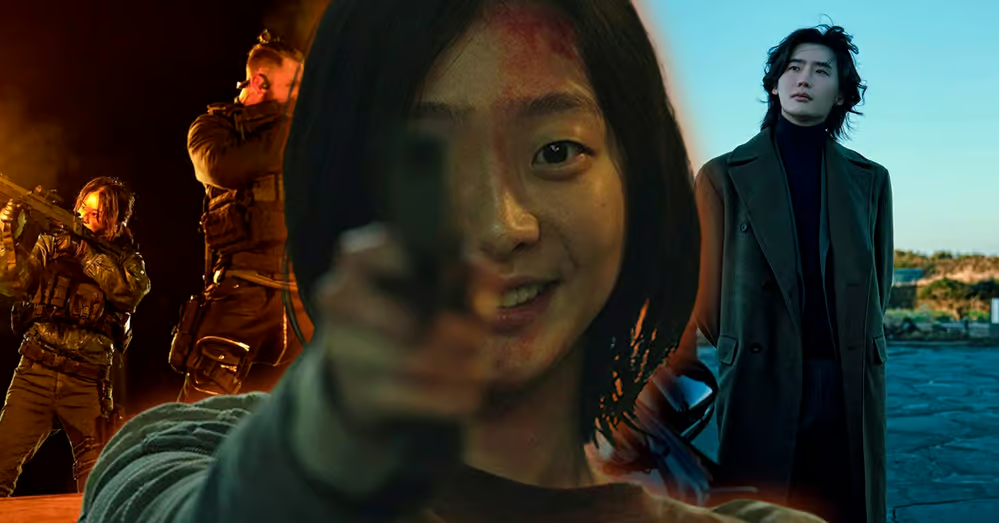
🌑 Visually, “The Witch: Part 3” is hauntingly beautiful in a way that seeps under your skin. The film trades bright brutality for shadows, cold lighting, and sterile environments that feel like graves dressed up as laboratories. Long, quiet shots linger just a little too long, creating constant unease. There’s a chilling contrast between abandoned rural landscapes and ultra-modern underground facilities, reinforcing the idea that the horror of this world exists everywhere—past, present, and future. The sound design is minimal but devastating, using silence and distant echoes to build dread far more effectively than jump scares ever could.

❤️ At its core, the film is a tragic character study disguised as a sci-fi thriller. Ja-yoon’s emotional isolation is palpable, especially in her interactions with the few people who still see her as human rather than a weapon. One quiet scene where she watches a normal family from a distance—unable to join them, unable to look away—says more than pages of dialogue ever could. The movie doesn’t try to redeem her in a traditional sense; instead, it explores whether survival itself can be a form of redemption. Her choices become heavier, more irreversible, and painfully adult.
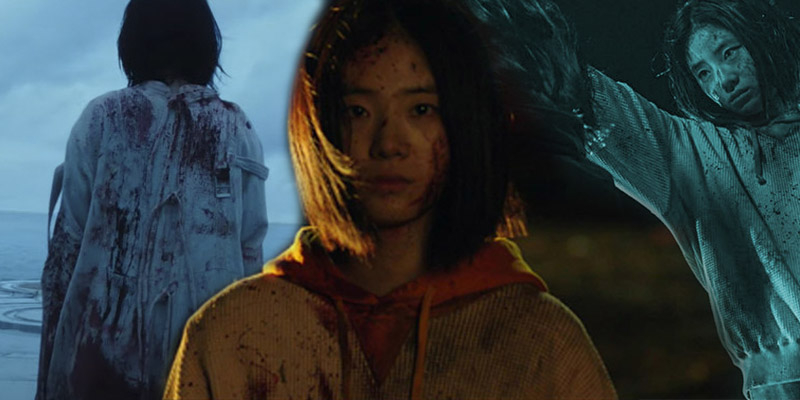
🔥 By the final act, “The Witch: Part 3 (2026)” transforms into something haunting and unforgettable. The climax is brutal, restrained, and emotionally devastating, refusing to offer clean victories or simple closure. Instead, it leaves you with a sense of loss, awe, and uneasy respect for the monster and the woman sharing the same body. This isn’t just a sequel—it’s a bold, uncompromising conclusion that trusts its audience to handle darkness without comfort. When the screen finally cuts to black, you don’t feel entertained—you feel changed, like you’ve witnessed the end of a legend written in blood and silence.